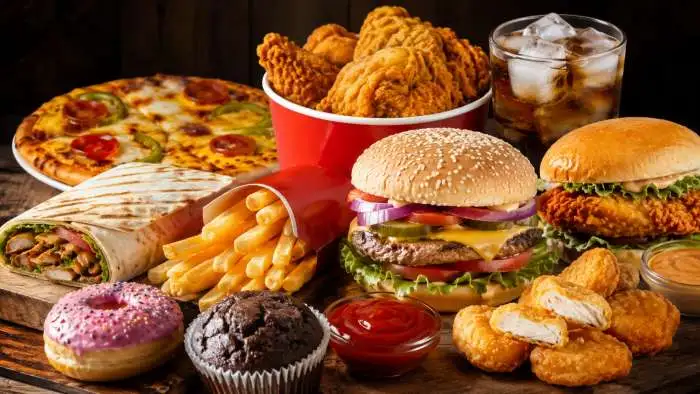
Some fast-food items capture attention and win hearts the world over – burgers (in all their forms), for example, along with pizza, fries and hot dogs. Then people associate those on-the-go foods with one place or country, like Aussie meat pies, British fish and chips and a variety of classic street food dishes that chefs cook to order. Here we look at the world's best fast foods, counting down to the greatest dish of all.
Bitter Ballen, Netherlands
Bitter Ballen are moreish fried morels that often serve as a bar snack. Utterly delicious, they’re made from beef in a thick gravy, which chills before chefs roll it into balls, bread it, and deep-fry it. While cooks traditionally make them with meat leftover from the weekend roast, Dutch homes rarely prepare them these days but takeaway spots all around the Netherlands sell them (usually with a side of fries).
Pierogi, Poland
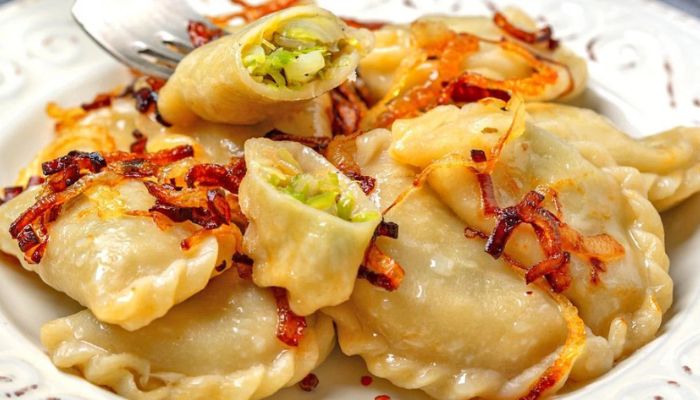
Humble yet tasty creations, these small, crescent-shaped dumplings have been part of Polish food culture since the 13th century. They even have a patron saint: St Hyacinth. The dough consists of flour, water and sometimes egg and, once filled, chefs first poach the dumplings and then fry them in butter. The choice of fillings is endless, but most popular are cheese and potato, cabbage and mushroom and meat and soft fruits.
Choripán, Argentina
Dating back to the 19th century, choripán is a traditional Argentinian sandwich loved for its distinctive, smoky pork flavour and chewy bread. Street vendors sell it across the country, and they design it to be eaten on the move. It consists of a meaty, grilled chorizo sausage stuffed inside a crusty roll with plenty of piquant, herby chimichurri.
You may also read :- Crispy Chinese Baked Chicken Wings Recipe
Slider, USA
Now ubiquitous on menus worldwide – from corporate events and weddings to restaurants and bars – the slider is a bite-sized hamburger. It dates to 1921, when Kansas-born Billy Ingram founded the US burger chain White Castle. Its small, square, five-cent hamburgers featured centrally on the menu and gained popularity instantly. Today, thousands of White Castle Original Sliders sell daily, and they still serve them the same way: a diminutive, steam-grilled square patty with five holes (to help it cook quickly) is topped with onions and pickles and stuffed into a bun.
Elote, Mexico
Elote, or Mexican street corn, enjoys incredible popularity in Mexico, where its history stretches back centuries. Its appeal has spread to the US, especially southern California, where food trucks and market stalls serve the dressed-up corn. The zingy, spicy snack – typically served on a stick – features a corn cob charred on the grill, slathered with a mixture of butter, mayonnaise, lime, chilli and coriander and finished with Cotija, an aged Mexican cheese.
Rolex, Uganda
Found across Uganda, this popular street food is essentially a thin, vegetable-packed omelette served inside an East African–style chapati, rolled up into a burrito-like shape. A savvy businessman, who set up a stall next to a university in Kikoni, Kampala, is believed to have created the first Rolex, offering students a tasty and affordable on-the-go lunch. These days, you’ll find street vendors across the country serving up the delight.
Pad Thai, Thailand
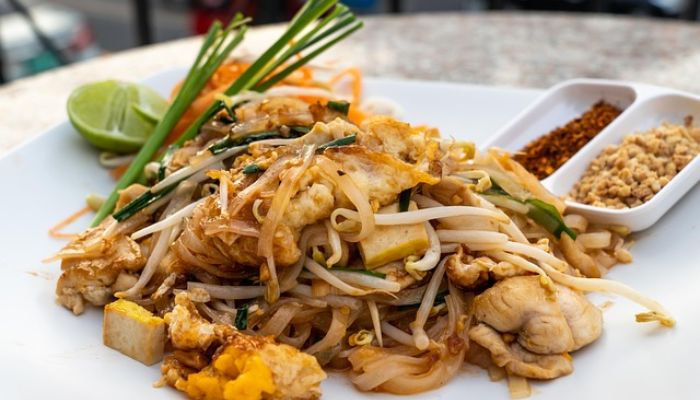
Sold at food markets and on every street corner in Thailand – and at many restaurants around the world – pad Thai is a filling dish served with levels of heat from mild to mouth-numbing. Typically, rice noodles, shrimp, egg and a handful of bean sprouts are stir-fried together with lime and chilli and topped with crushed peanuts. Nutritious and cheap to make, it was created after the Second World War, when the Thai prime minister became concerned about the country’s high levels of rice consumption.
Souvlaki, Greece
Chunks of skewered meat – usually chicken or pork – grill over charcoal and serve as the main ingredients of this tasty Greek fast-food dish. They serve it with salad and a dollop of tzatziki, either in a pitta or with one on the side. Scholars believe its origins stretch back centuries; archaeologists dated the oldest-known skewers discovered on Santorini back to 2000 BC. Homer also mentions meat cooked over embers in his epic eighth-century poem, The Iliad.
Bhelpuri, India
The origins of this sweet and sour Indian street food snack aren't clear, with different theories linking it to cafés in Gujarat and street hawkers in Mumbai. Popular at street food markets and often eaten at the beach, bhelpuri (or bhel puri) is made from puffed rice mixed with potatoes, onions, chaat masala – a type of spice mix – and chutney. Each mouthful delivers a unique combination of flavours and textures – think sweet and salty, tender and crispy.
Conclusion
From the streets of Kampala to the beaches of Mumbai, fast food is far more than just a quick meal on the go—it is a window into a country's history and culture. Whether it is a centuries-old culinary tradition like Mexico’s grilled elote and Greece’s ancient souvlaki, or a clever post-war creation like Thailand’s pad Thai, these iconic dishes prove that convenience doesn't have to mean sacrificing flavor. While some items like the American slider have evolved into global menu staples, they all share a common thread: they are affordable, deeply satisfying, and designed to bring people together, one delicious bite at a time.
Frequently Asked Questions
What is a Ugandan Rolex?
A Rolex is a popular Ugandan street food consisting of a thin omelette packed with vegetables, which is then rolled up inside an East African–style chapati, similar to a burrito.
Why was Pad Thai originally created?
Pad Thai was developed after World War II. The Thai prime minister introduced the dish to help reduce the country's high levels of rice consumption by encouraging people to eat noodles instead.
What gives an Argentinian Choripán its distinct flavor?
A choripán gets its signature taste from a smoky, grilled pork chorizo sausage placed inside a crusty roll and topped with a generous amount of herby, piquant chimichurri sauce.
How old is the dish Souvlaki?
Souvlaki has ancient roots. Archaeologists have found meat skewers on Santorini dating back to 2000 BC, and the practice of cooking meat over embers is even mentioned in Homer's 8th-century poem, The Iliad.
What is the secret behind the shape and cooking of a White Castle slider?
The classic White Castle slider is a small, square patty featuring five holes. These holes are specifically designed to help the steam-grilled meat cook through as quickly as possible.