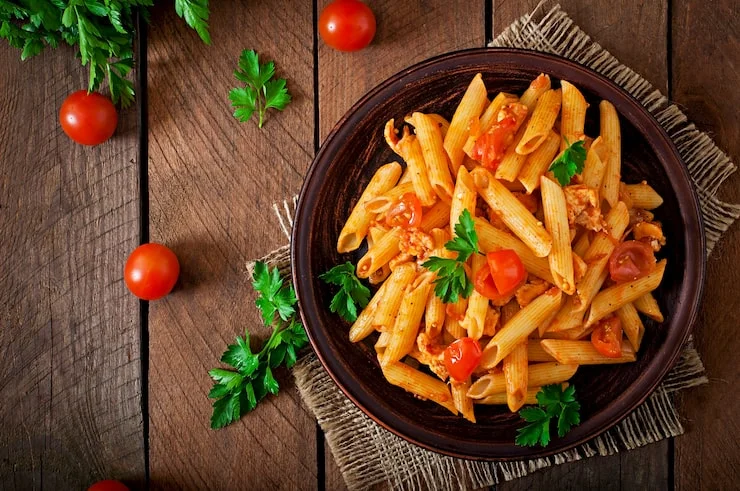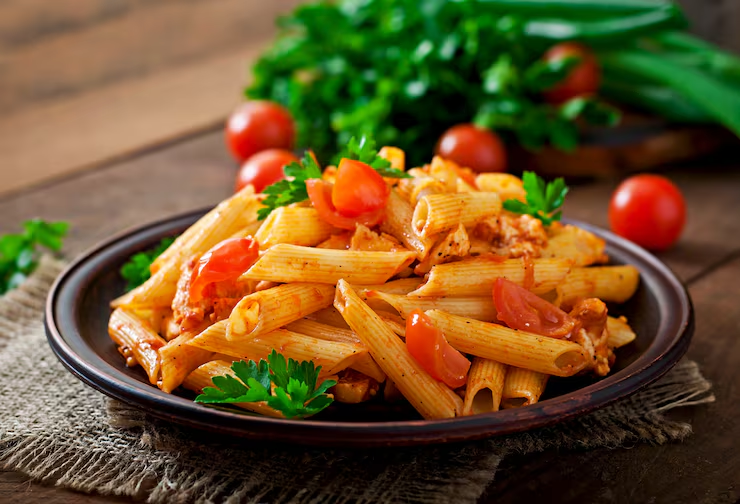
Making the perfect pasta comes down to three essential elements: properly salted water, cooking to al dente texture, and finishing the pasta in your sauce. Whether using dried pasta from a box or making fresh dough from scratch, these fundamental techniques transform simple ingredients into an extraordinary meal that tastes like it came from an Italian trattoria .
How to Make the Perfect Pasta: Start with the Right Foundation
Let me share something I have learned after countless hours in the kitchen and conversations with professional chefs: making incredible pasta is not about secrets or fancy equipment. It is about understanding a few basic principles and applying them with confidence.
The difference between good pasta and life-changing pasta often comes down to things you cannot see—like how you handle the water and what you do in those final moments before serving .
When I first started cooking, I thought pasta was the easy part. Boil water, dump in noodles, add sauce. Simple, right? Wrong. I ended up with sticky clumps, bland strands, and sauces that slid right off. The good news is that fixing these problems is easier than you might think.
Easy Guide to Perfect Pasta: Master the Basics
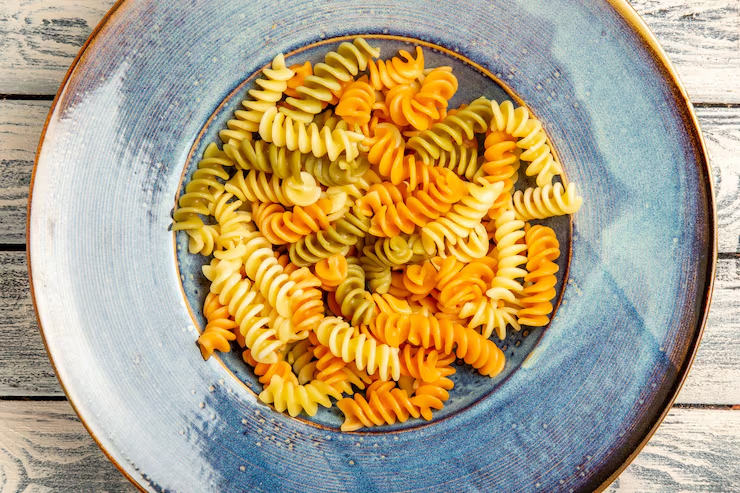
The Water Rules All Chefs Agree On
I reached out to several food experts to get their take on what matters most. Lorenzo Boni, who develops products and recipes for Barilla Group, told me something surprising. He explained that people often let water boil with salt for too long before adding pasta, which concentrates the sodium and takes away from the delicate flavor of the pasta itself .
Here is what the pros want you to know:
Start with cold tap water. Executive chef Philip Guardione from Piccola Cucina Restaurant Group explained that hot water from the tap can pick up metals from your pipes. More importantly, pasta must meet water that is already boiling. Dropping noodles into cold water makes them gummy, and as Guardione puts it, the pasta "loses its soul" .
Salt after boiling. Add your salt once the water has reached a rolling boil, right before the pasta goes in. This seasons the noodles perfectly without over-concentrating the salt .
Use enough water. For every 100 grams of pasta, you need about 500 milliliters of water. This gives the noodles room to move around and cook evenly without clumping .
How to Cook Pasta Perfectly Every Time
Cooking pasta seems straightforward, but those little details make all the difference. Follow these steps and you will never go back to your old method.
Bring a large pot of water to a vigorous boil. The water should be moving actively, not just simmering. Add a generous pinch of salt—about half a teaspoon for every 100 grams of pasta . Stir the pasta right after adding it to prevent sticking. This is the moment when clumps form, so be thorough .
Cooking times vary by pasta type and shape. For dried spaghetti or linguine, aim for about eight minutes. Shorter, thicker shapes like penne need ten to twelve minutes. Fresh pasta cooks much faster, usually just two to three minutes . Always taste test before draining. The pasta should be tender but firm to the bite, with a tiny white speck in the center when you bite into it. That is the definition of al dente .
You may also read :- Best Vegetarian Pasta Recipes: Easy, Healthy and Delicious Meals
The Golden Rule: Never Rinse Your Pasta
This might be the most important tip I can give you. Do not rinse your pasta after draining. Those food experts I mentioned were unanimous on this point. Rinsing washes away the natural starch that helps sauce cling to the noodles. It also removes the salt you carefully added to the water .
Instead, drain the pasta and reserve about a cup of that starchy cooking water before you dump the pot. This liquid is liquid gold for your sauce .
How to Make Pasta at Home Easy: Fresh Dough Demystified
Now let us talk about making pasta from scratch. I know it sounds intimidating, but honestly, it is one of the most rewarding things you can do in your kitchen. The texture of fresh pasta is something you simply cannot buy in a box.
The Three-Ingredient Secret
Cookbook author Danny Freeman shared an approach that takes the pressure off beginners. He recommends starting with pici pasta, a rustic hand-rolled shape from Tuscany that needs only flour, water, and olive oil. No machine required .
For a more classic egg pasta, you will need:
- 3 cups of '00' flour (or all-purpose in a pinch)
- 4 eggs plus one extra yolk
- A pinch of salt
- A drizzle of olive oil
Chef Isabella Rossi, who owns a Michelin-starred Italian restaurant, puts it simply: "The key to exceptional pasta is in the quality of your ingredients; start with the best eggs and flour you can find" .
How to Make Pasta Step by Step with Pictures (Well, Words)
Let me walk you through this like we are in the kitchen together.
Make the well. Pour your flour onto a clean counter or large cutting board. Use your hands to shape it into a mound, then create a wide well in the center. Think of a volcano shape with deep walls .
Add the eggs. Crack the eggs and extra yolk into that well. Add your salt and olive oil. Using a fork, gently beat the eggs right in the well, then start pulling flour in from the edges. Go slowly and keep those flour walls intact as long as you can .
Knead with purpose. Once the mixture becomes too thick for a fork, use your hands to bring it together into a shaggy dough. Now comes the workout. Push the dough forward with the heel of your hand, fold it back over itself, and repeat. Do this for eight to ten minutes until the dough feels smooth and elastic and springs back when you poke it .
Marco Bellini, a pasta-making artisan from Bologna, emphasizes this point: "Vigorous kneading is essential. It gives the dough its signature elasticity" .
Rest is not optional. Wrap your dough tightly in plastic wrap and let it sit at room temperature for at least thirty minutes, preferably a full hour. This relaxes the gluten and makes rolling possible. If you try to roll it right away, it will fight you the whole way .
Rolling and Cutting Like a Pro
Divide your rested dough into manageable pieces. Keep the ones you are not working on covered with a towel so they do not dry out .
If you have a pasta machine, start at the widest setting. Feed the dough through, fold it in half, and run it through again. Do this a few times to build strength, then gradually move to thinner settings until you can see your hand through the dough .
For hand rolling, dust your surface well and roll from the center outward, turning the dough frequently to maintain even thickness .
For fettuccine, lightly dust your sheet, loosely roll it up, and cut into half-inch strips. Toss them with a little flour to separate .
How to Make the Perfect Pasta: Bringing It All Together
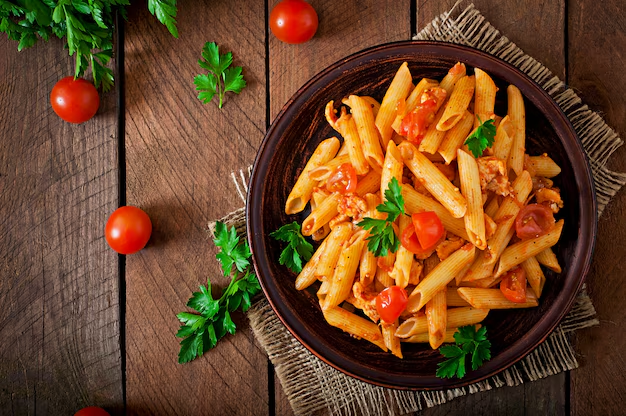
The Magic of Pasta Water
Here is where home cooking becomes restaurant quality. Remember that starchy water you saved? It is about to work wonders.
When your sauce is nearly ready, add your drained pasta directly into the pan with the sauce. Add a splash of that reserved water and turn the heat to medium-high. Toss everything vigorously. The starch in the water binds with the fat in your sauce to create a silky emulsion that clings to every piece of pasta .
Boni describes this transformation perfectly: finishing pasta in the sauce with that starchy water turns it "into a silky, glossy coating that hugs every bite" .
The Cheese Trick You Need to Know
Giada De Laurentiis taught Bobby Flay a trick that changes everything. Before you add your sauce, sprinkle finely grated Parmesan over your hot, drained pasta. This creates a bond between the cheese and noodles that helps the sauce soak in even better .
Add the cheese gradually and keep stirring to prevent clumping. The result is pasta with deeper flavor and better texture .
Pairing Shapes with Sauces
Not all pasta shapes work with all sauces, and understanding this takes your cooking to another level.
Long, flat noodles like tagliatelle and fettuccine love rich, heavy sauces. Think Bolognese or Alfredo. The wide surface catches and holds the sauce beautifully .
Ridged tubes like penne rigate are perfect for chunky vegetable sauces or meat ragus. The ridges trap sauce, and the hollow center catches little bits of goodness .
Delicate filled pastas like ravioli need light treatment. Brown butter with sage lets the filling shine without overwhelming it .
Thin strands like spaghetti are classic with oil-based sauces or simple tomato preparations. The lightness of the pasta matches the lightness of the sauce .
Chef Luca Romano puts it well: "Don't underestimate the power of the choice of sauce. A great pairing elevates the dish's flavors" .
Troubleshooting Common Pasta Problems
Why Does My Pasta Stick Together?
Sticking usually means one of three things. You did not use enough water, you forgot to stir right after adding the pasta, or you let it sit too long after draining. Next time, use a bigger pot, stir immediately, and sauce your pasta right away instead of letting it sit in the colander .
Why Is My Fresh Pasta Tough?
Tough pasta comes from overworking the dough or not resting it long enough. Kneading develops gluten, which is good, but too much makes it chewy and hard. Resting lets that gluten relax so you can roll it thin. If your dough fights you, wrap it up and let it rest another fifteen minutes .
Why Does My Sauce Slide Off?
This is the most common complaint I hear, and the fix is simple. You are not emulsifying. Next time, undercook your pasta by about two minutes, move it directly into the sauce with some pasta water, and toss over heat until the sauce coats every strand. The starch does the work .
Expert Tips for Next-Level Pasta
Save that water for other uses. Davide Leite, creator of Leite's Culinaria, suggests keeping extra pasta water in the fridge for up to three days or freezing it in ice cube trays. Use it to fix split sauces, thin out pesto, or add body to soups .
Finish with cold butter. Right at the end, toss in a small knob of cold butter and swirl until it melts. This adds shine and richness that makes the dish look and taste professionally finished .
Let filled pasta steam. For ravioli or tortellini, try Leite's method. Cook them in a skillet with just enough water or broth to cover, put on a lid, and let them steam. This gentler method keeps delicate filled pastas from falling apart .
Frequently Asked Questions
How do I know when fresh pasta dough is kneaded enough?
The dough should feel smooth and silky, not sticky. Press it with your finger—it should spring back. If the indentation remains, keep kneading. This usually takes eight to ten minutes by hand .
Can I use all-purpose flour instead of '00' flour?
Yes, you absolutely can. The texture will be slightly different—a bit firmer and less delicate—but it will still be delicious. Many home cooks use all-purpose with great results .
How long does fresh pasta last?
You can keep fresh pasta in the refrigerator for up to two days if wrapped tightly. For longer storage, freeze it in a single layer on a baking sheet, then transfer to an airtight container. It will keep for about two months .
Do I need a pasta machine?
Not at all. Many traditional Italian pastas like pici, orecchiette, and cavatelli are shaped entirely by hand. A rolling pin works fine for sheet pastas like lasagna. Machines make things easier and more consistent, but they are not required .
Why is my pasta water supposed to be "like the sea"?
This classic instruction means the water should be well-salted, but not overwhelmingly so. Aim for about one to one and a half teaspoons of salt per pound of pasta. The Mediterranean, not the Dead Sea, as one chef put it .